Welcome to the official website of Hongwangda Supply Chain Co., Ltd.

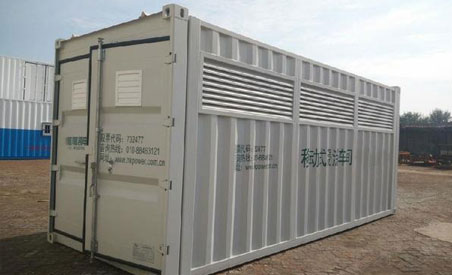
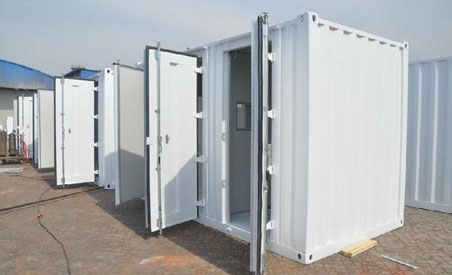
This utility model relates to power equipment boxes. Specifically, it involves a new type of power equipment box, which includes a rain-proof canopy, a box body, a base, a humidity detector, a temperature-sensing optical fiber, a processor, a wireless base station, a fan, and a solar power supply device. The humidity detector and the temperature-sensing optical fiber are used to detect the moisture content and temperature inside the power equipment box, and the detected data is sent to the processor. The processor collects, calculates, judges the detected data, and sends it to the monitoring device. The monitoring device includes a remote background monitoring device and a user's mobile terminal. After receiving an abnormal alarm message, the monitoring device will issue corresponding instructions to eliminate the corresponding hazards, and the staff will make corresponding handling based on the alarm information. Thus, real-time monitoring of the environment inside the power equipment box can be achieved, improving the safety and reliability of the power equipment box, and effectively reducing the work difficulty and workload of the inspection personnel, and improving work efficiency.
In recent years, with the continuous acceleration of China's power development, the Chinese power grid has also developed rapidly, and its network scale has continuously expanded. The required power equipment has also increased significantly. Due to construction costs and related technical reasons, many power equipment is installed outdoors. To prevent damage to the power equipment caused by rain and other factors, these power equipment are installed in equipment boxes.
Traditional power equipment boxes are equipped with several ventilation holes to address the heat dissipation issue of the equipment. However, during rainy and humid weather or when seasons change, humid air will enter the power equipment box through these ventilation holes, causing condensation water to form inside the box, which directly threatens the safe operation of the primary equipment and secondary instruments and meters inside. Since the locations where condensation or moisture occurs are all within the power equipment box, it is difficult to detect potential hazards through routine inspections. Additionally, the ventilation holes of traditional power equipment boxes will often become ineffective due to dust accumulation over a long period of time. When power equipment operates for a long time without effective heat dissipation, it is highly likely to overheat and be damaged, or even cause a fire.
TYPE
NEWS
- Share: What are the materials for container decoration?30/07/2025

- Does the folding prefabricated housing have good insulation and safety features? And is it possible to install a bathroom inside?30/07/2025
- The role of energy storage containers in the power system30/07/2025
- What purposes can be achieved by choosing special containers?30/07/2025
- A manufacturing method for a new type of power equipment box30/07/2025
MESSAGE
CONTACT US
We offer comprehensive pre-sale and after-sale services. We look forward to your inquiries!